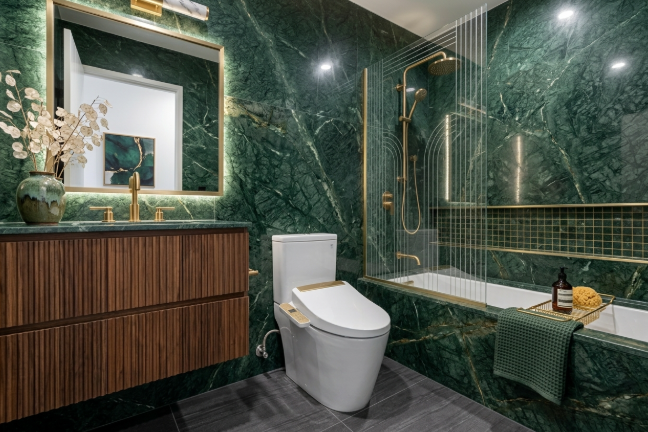
Entering a boutique hotel bathroom, guests notice design details that set the space apart from standard accommodations. Many designers are now choosing deep emerald or muted olive rectangular tiles to create a spa-like atmosphere. However, for these vibrant tiles to perform in humid, wet environments, they must be protected by advanced waterproof coatings. Selecting the right tile with a high-performance glaze is not just an aesthetic decision, but a practical one—especially when guest comfort and facility longevity are at stake. Understanding which finishes stand up to daily cleaning and constant moisture can mean the difference between a signature look that lasts and one that quickly shows wear.
Green Rectangular Tiles Design Trends for Boutique Hotel Bathrooms
Designers working in hospitality have embraced Green Rectangular Tiles for their ability to evoke tranquility and connect guests to biophilic concepts—those that incorporate nature into interior spaces. Popular shades range from lush emerald to earthy olive, lending a sense of calm and luxury to bathroom walls and shower enclosures. Many boutique hotels use stacked or offset patterns, which accentuate the elongated shape and create visual movement within compact areas. This approach pairs well with matte gold fixtures and natural wood accents, amplifying the sophisticated feel.
One emerging trend is mixing tile finishes within the same color family for added depth. For example, a glossy accent band set against a field of satin tiles draws the eye and reflects light differently throughout the day. Choosing waterproof Green Rectangular Tiles hotel bathroom design elements also allows for more creative layouts, as these surfaces maintain their color vibrancy and resist staining. Comparing tile pattern layouts for moisture-prone bathrooms helps designers select arrangements that maximize style and functionality.
Waterproof Glazing Technology for High Moisture Hotel Spaces
Bathrooms in boutique hotels demand tiles that can stand up to repeated exposure to steam, splashes, and aggressive cleaning routines. The latest waterproof glazing technology involves firing a liquid glass coating onto the tile surface at high temperatures. This process creates a non-porous barrier, blocking water and preventing stains from penetrating the material beneath. High-quality glazes are formulated to resist fading, etching, and the buildup of mineral deposits, preserving the tile’s original shade and sheen.
When specifying tiles for shower surrounds or backsplashes, designers should confirm that the waterproof glaze is rated for direct water contact. Some glazes are optimized for walls, while others are suitable for both walls and floors. For a practical example, Green Rectangular Tiles with a certified waterproof finish are frequently chosen for boutique hotel projects seeking both style and resilience. This type of product offers a reliable surface that enhances the visual appeal of hospitality settings.
Details like slip resistance and ease of maintenance can also be influenced by the type of glaze used. Choosing a finish that balances aesthetics with performance ensures that bathrooms maintain their designer look even in the most demanding environments.
Selecting Durable Ceramic and Porcelain Materials for Hospitality Projects
Ceramic and porcelain tiles are the materials of choice for many hotel bathrooms due to their proven resistance to moisture and heavy use. Porcelain, in particular, is fired at higher temperatures, resulting in a denser and less porous structure. This makes it an excellent candidate for areas exposed to water, as it provides an extra layer of protection in addition to the glaze.
When evaluating materials, designers should look for certifications that indicate suitability for wet environments, such as water absorption rates below a certain threshold. These specifications are often listed by manufacturers and help guide selections toward products designed for hospitality standards. Understanding how porcelain tile differs from ceramic in water resistance informs decisions that impact long-term performance and maintenance costs.
Color consistency is another consideration. Tiles produced in single batches tend to have more uniform shades, which is important when installing green tiles in large or highly visible areas. This attention to detail ensures the finished space meets design expectations and holds up under scrutiny from discerning guests.
Maintenance Protocols for Preserving Emerald and Olive Tile Finishes
Even the most durable tile installations require proper care to maintain their appearance over time. Boutique hotel maintenance teams should use pH-neutral cleaners that are safe for glazed surfaces, avoiding products with harsh acids or abrasives that can dull the finish. Immediate cleanup of spills and regular removal of soap scum prevent stains from becoming embedded in grout lines or surface crevices.
Establishing a cleaning schedule tailored to high-traffic bathrooms keeps emerald and olive tile finishes looking vibrant. Spot inspections can help identify areas where water may be collecting, signaling the need for additional caulking or grout repair. For tiles with a matte glaze, routine buffing with a microfiber cloth helps maintain their subtle sheen without creating slippery conditions.
Training staff in these protocols ensures that the rich color and texture of specialty tiles remain a focal point for guests, supporting the hotel’s reputation for unique, well-kept interiors.
Conclusion
For boutique hotel bathroom designers, specifying tiles with advanced waterproof glazing and selecting materials engineered for heavy moisture exposure ensures lasting elegance. Prioritizing certified finishes and implementing targeted maintenance practices keeps green tile installations looking as impressive as the day they were installed. Now is the time to review manufacturer documentation and request glaze performance data before finalizing your next project’s tile palette.